-
FeaturedRoundtable 1📌 Secure your place at the table from September 4 via the event app. Only limited spaces available!
-
FeaturedRoundtable 2📌 Secure your place at the table from September 4 via the event app. Only limited spaces available!
-
FeaturedRoundtable 3📌 Secure your place at the table from September 4 via the event app. Only limited spaces available!
-
FeaturedRoundtable 4📌 Secure your place at the table from September 4 via the event app. Only limited spaces available!
-
FeaturedRoundtable 5📌 Secure your place at the table from September 4 via the event app. Only limited spaces available!
-
FeaturedRoundtable 6📌 Secure your place at the table from September 4 via the event app. Only limited spaces available!
-
FeaturedRoundtable 7📌 Secure your place at the table from September 4 via the event app. Only limited spaces available!
-
FeaturedRoundtable 8📌 Secure your place at the table from September 4 via the event app. Only limited spaces available!
-
FeaturedRoundtable 9📌 Secure your place at the table from September 4 via the event app. Only limited spaces available!
-
FeaturedRoundtable 10📌 Secure your place at the table from September 4 via the event app. Only limited spaces available!
-
Main Stage
As demand for next-generation ingredients grows, the challenge is not just discovery – but scaling fast enough to meet demand, while meeting safety and regulatory requirements for market entry. From precision fermentation to novel colourings and additives, innovators are racing to turn breakthrough science into commercial reality. AI is transforming discovery, helping predict functionality, optimise formulations and uncover new ingredient possibilities. But beyond the promise, what does success look like at scale? Which ingredients are proving viable? What can today’s frontrunners teach the next generation of food innovators?
Speakers -
AuditoriumFrom increasing fibre to reducing HFSS products, reformulation has become a key tool for improving diets. But do these interventions always lead to healthier baskets? What surprising outcomes can emerge along the way? And when consumer behaviour sits at the heart of the challenge, how can data help identify where to act and measure real-world impact? Drawing on Sainsbury's experience, this case study explores the realities of driving dietary change at scale and what retailers can teach the wider industry about turning better products into healthier baskets.
-
Main Stage
As food, supplements, and healthcare converge, nutrition is evolving beyond sustenance toward supporting long-term health and wellbeing. From product development and scientific validation to retail and consumer engagement, companies are exploring how to deliver solutions that are both effective and widely adopted. As demand for functionality grows, so does the need for food to feel good. How are organisations navigating this shift? And what does it take to design products and strategies that deliver value across health, business, and consumer expectations?
-
Main Stage
As scrutiny rises from investors and CPGs, the rules of progress are shifting from vision to viability. In this high-energy session, Series A+ innovators put their businesses to the test, demonstrating how they perform against real-world constraints: cost, procurement, regulation, manufacturability, and ultimately, revenue. Through fast-paced pitches and live Q&A, what really separates traction from hype: validated demand, viable pricing, regulatory readiness, or truly adaptive commercialisation strategies? And in today’s volatile environment, which businesses are built to survive, not just impress?
Host -
Main Stage
Who’s leading the charge in transforming EMEA food innovation? Join for the grand finale of this year’s Global Food Tech Awards as we reveal the winner live on stage.
-
Main Stage
Drawing on advances in bioactive proteins and human health, this presentation explores the opportunity to build nutrition products that support resilience, wellness and healthy ageing from the start.
-
Main StageFast forward to 2046: imagine a food system rebuilt around a deeper understanding of why we eat. Behavioural science, cultural insight, and sensory design sit alongside data, technology, and automation. Eating is shaped as much by emotion and experience as it is by health or cost. In this future, success is measured not just by what people should eat, but what they genuinely want to return to. What had to change across R&D, investment, and mindset to unlock this 2046 food system - and what does that mean for how we start building it today?
-
Main Stage
As GLP‑1 treatments evolve and usage becomes more sustained - particularly through pill formats - appetite patterns are shifting permanently. Consumers are eating less, choosing differently, and becoming more selective about what food is worth eating at all. For CPGs, this changes the game. As portions shrink, the pressure on every bite increases. Food has to work harder, nutritionally and emotionally. So, what now earns a place in the basket? From protein to fibre, how should brands rethink formulation and portioning as consumer demand fundamentally resets?
-
Sponsored
Join fellow delegates for a relaxed morning run through Greenwich before the agenda gets underway. A chance to shake off jet lag, spark informal conversations and start the day energised, present and ready to engage. Open to all.
-
Main Stage
Why we mustn’t forget food’s role as an emotional anchor.
-
FeaturedBreakout Room

Much of the industry’s response to GLP-1 has focused on reformulation: smaller portions, higher protein, companion products for consumers on the drug. That response targets the population currently medicated, and that space is already crowded.
Discontinuation rates remain high, and most consumers will never take the treatment at all. Yet many still aspire to the appetite control and metabolic benefits associated with these drugs.
This session explores where brands can create value, from near-term commercial opportunities to emerging areas of R&D, identifying where companies can build differentiation, instead of following the same playbook as the rest of the market.
-
Main Stage
Food is being optimised to perfection: faster, cheaper, healthier. But that’s not what makes people come back. Food is emotion, culture, and identity. As the system becomes more engineered, how do we define real success and design food people choose on repeat?
-
NewInnovation Stage
Food innovation succeeds when people want to come back for more. As new ingredients and technologies reshape the food system, what role can gastronomy play in turning scientific breakthroughs into memorable food experiences? And how can chefs and innovators work together to make food technologies desirable?
Created by Rasmus Munk, SPORA and ALCHEMIST represent two sides of the same ambition: using gastronomy as a platform to explore, test and bring the next generation of food innovation to life.
-
Main Stage
Food might be designed using data and science, but it still has to be made in the real world. Supply chains and factories are getting faster, smarter, and more connected - using automation to keep up with changing ingredients and rising expectations. But as products become more complex, can production keep up without compromising on taste, quality or safety? And as more decisions are made by machines, what role do people still play in making sure the food we buy is something we trust and want to come back to?
-
Main Stage
Many promising food innovations fail to make the leap from pilot to meaningful commercial impact. The challenge is rarely just technology; success depends on aligning scientific validation, consumer acceptance, regulatory pathways and commercial readiness. So where does innovation get stuck most often? What separates concepts that scale from those that stall? And how can the industry build stronger pathways from breakthrough ideas to products that create measurable value?
-
The focus is shifting from simply living longer to living better, creating new opportunities for product innovation around consumers’ healthspan. As food takes on a more functional role in healthy ageing, it still needs to deliver experiences people want to come back to. How do nutrafoods and food’s vibe shift translate into reformulation strategy and new product development in this space?
-
NewInnovation Stage
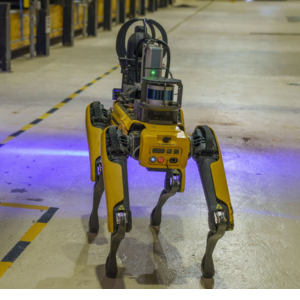
What happens when AI and automation enter a real manufacturing environment? Join Cargill and Boston Dynamics for a discussion and Q&A exploring how Spot is being used within Cargill’s operations, the lessons emerging from its implementation and what food companies should consider when evaluating robotics for their own facilities.
Following the session, Boston Dynamics and Cargill will walk through the exhibition with Spot.
-
Main Stage
Some foods people can’t live without. From climate volatility to supply shortages and rising costs, the pressure on key ingredients and products has exposed something deeper about how the food system responds to disruption. Whether it’s coffee, dairy, palm oil, eggs and staple categories, why do some categories trigger rapid innovation and investment, while others focus on securing and stabilising supply? Which other ingredients could trigger that same acceleration when pressure hits?
-
SponsoredExhibition and Networking Area

Unveiling Panvivo GLP1ve, Millbio's new functional bread ingredient designed to support satiety and the GLP-1 pathway, consumer tested with Thimus' sensory neuroscience, proof that healthy bread doesn't have to mean a compromise.
-
Networking Exhibition
-
Exhibition and Networking Area
-
Exhibition and Networking Area
-
Exhibition and Networking Area
-
Exhibition and Networking Area
-
Main StageWhat do consumers mean when they say they want to age well? Drawing on new global consumer research from Lumina, this presentation reveals the health priorities influencing purchasing decisions, the interventions consumers believe matter most, and where the biggest opportunities lie for brands looking to turn longer lives into healthier ones.
-
Auditorium
What are the stories shaping the food industry right now? Join the FoodNavigator editorial team as they unpack the biggest headlines, emerging trends and industry talking points from the past week.
-
FeaturedBreakout Room
Snacking is where food innovation moves fastest. Join a live innovation challenge that takes you from product inspiration to concept creation in a single session.
Hear how Tony's Chocolonely founder Teun brought a new snack concept to life, discover how Schrödinger is helping teams accelerate product development with AI, then apply those insights in a live innovation challenge to create and pitch your own next-generation snack concept.
Presentation powered by-

-
FeaturedBreakout Room
Most AI sessions ask you to imagine the lab. This one starts in it.
Experience ice cream development live, from a blank electronic lab notebook to a recipe with trials side by side, just as a food scientist would. See ingredients and test methods pulled from a governed database, with nutritional calculations performed in real time.
Experience what happens when AI is wired directly into the product development process, and try it for yourself: train a model and put it to work what-if analysis that runs experiments in silico, and recommended formulations with predicted nutritional and functional values and confidence intervals.
Sponsored by:
-
Main Stage
If 2046 promises food that is functional, personalised, and anchored in culture, reformulation is where that future is won or lost today. How are brands balancing scientific evidence with perception, speed, and reputation risk in a world where products are judged instantly? Where are data and digital tools genuinely accelerating reformulation, and how are CPGs navigating trade-offs between taste, shelf life, functionality, and cost to deliver affordable, nutritious food that is chosen repeatedly?
Speakers -
NewInnovation Stage
Meet scale-ups turning breakthrough science and technology into commercial reality. From microbiome and nutrition innovation to smarter product development, hear how these businesses are scaling new solutions for the food industry.
Featuring: Aelius Biotech, Everis, Enbiosis, Klura Labs, Joyn, PentaSweet
-
SponsoredInnovation Stage
Over drinks our teams take to the stage to pitch their idea to the crowd. Who has the GOAT snack? We’ll let democracy decide as the crowd crowns its winners. Join us in the main arena for networking drinks and continue the day’s conversations in a relaxed setting.
-
NewInnovation Stage
Meet innovators harnessing biotechnology, fermentation and circular production models.
Biophelion, Dapibuset, Global Sustainable Transformation, MicroLub, Caffree, TerraSafe
-
NewInnovation Stage
Meet innovators developing the next generation of ingredients and nutrition solutions, from gut health and functional foods to novel formulations.
Featuring: Eclipse Ingredients, Key2Biotics, Potina, BayouBest Foods, Zolvia, SciencePower, Fabas
-
NewInnovation Stage
Meet innovators helping food companies make faster, smarter and more evidence-driven decisions across product development, consumer insights, validation and commercialisation.
Featuring: Biosense Solutions, CERTI, Quartz Labs, Comet Clinical, Snap2Cook, Digitaste, Figura -
Main Stage
-
Main Stage
Consumers seek to eat healthier yet purchasing decisions are often driven by habit, convenience, price, and perception. As nutrition moves up the agenda, retailers are playing an increasingly influential role in guiding purchasing choices. How are they supporting consumers in making the healthier choice the easier choice?
-
Main Stage
In a system moving this fast, standing still means falling behind. The question now is what happens when we are back in the office on Monday morning. How will the insights from the past two days translate into action – to deliver food that people truly want to come back to? Which assumptions need to be challenged, which priorities must be reset, and which decisions can no longer be delayed?
-
FeaturedBreakout Room

Canada has built a highly collaborative food innovation ecosystem where start-ups, corporates, researchers, investors and industry partners work together to accelerate commercialisation, reduce risk and bring new solutions to market faster.This panel explores what makes the Canadian ecosystem unique and why a growing number of international companies are choosing Canada as a place to innovate, collaborate and expand.
Through perspectives from the Canadian Food Innovation Network (CFIN), market intelligence experts and international businesses that have established operations in Canada, the discussion will highlight the partnerships, insights and support systems helping food innovators succeed.
-
Main Stage
Simpler to reformulate and faster to scale, drinks often lead functional innovation. They are one of the fastest-moving formats in nutrition. As consumers increasingly seek products that support energy, wellbeing and performance, what can beverages tell us about where consumer demand is heading next? What do beverages reveal about what people want from food, and what lessons should shape wider portfolio decisions?
-
Main Stage
There’s one ingredient that all food-tech has in common: cash. While food innovation has never been more ambitious, it comes at a cost. From new ingredients and biomanufacturing platforms to reformulation strategies and food chain automation, building next-gen food businesses requires capital that doesn’t always fit traditional VC models. So where is liquidity really coming from? How can we stack capital intelligently?
-
Featured
An opportunity for leaders to connect with peers, exchange perspectives and discuss leadership, career growth and innovation in the food industry.
Open to everyone attending the summit.
)













































































)
)
)
)
)
)
)
)
)
)
)
)
)
)
)
)
)